Should Natural Wonders Charge an Entry Fee?
B2 · Reading and Discussion · Group work
Several of the world's most visited natural sites now cap daily numbers or charge to enter. The money usually goes back into repairing the paths and habitats that visitors wear down. Today you will read both sides of the argument and decide where you stand.
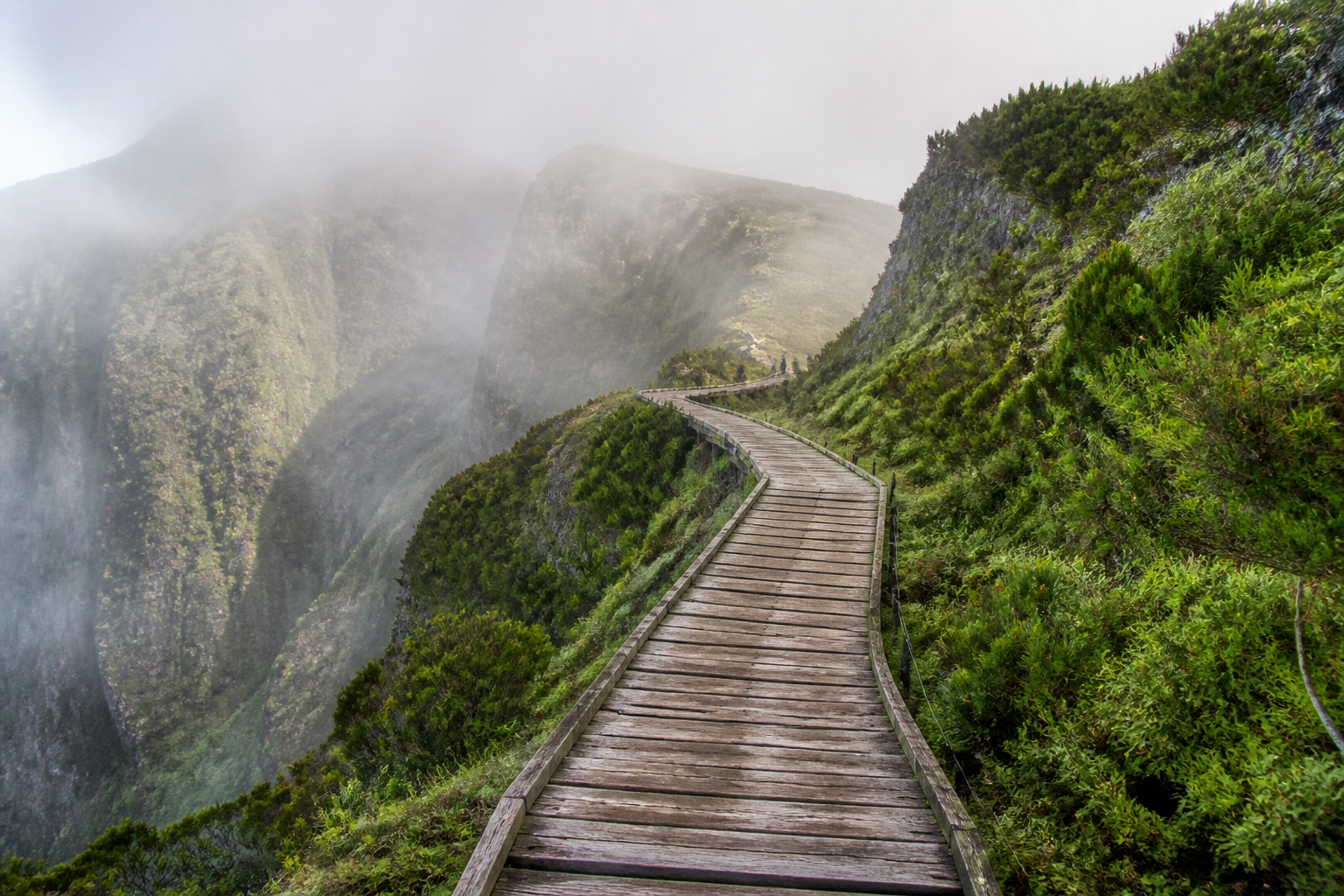
Warm-up
In pairs: look at the photo above. Would you pay to walk this path? Tell your partner one reason for your answer.
1. Reading: Who pays for paradise?
Read the text once for general meaning. You will need it for exercises 2 and 3.
Every summer, some of the world's most famous natural places welcome more visitors than ever before. Paths are worn down, litter piles up, and fragile habitats suffer under the pressure of millions of feet. To manage this, many sites now charge an entry fee or restrict the number of daily visitors.
Supporters argue that ticket money creates reliable revenue for conservation. It pays park rangers, helps maintain boardwalks, and allows areas damaged by erosion to recover. When people pay to enter, supporters say, they also value the place more and treat it with greater care.
Critics see it differently. Nature, they argue, belongs to everyone, and a fee makes wild places less accessible to families with smaller budgets. Local people may suddenly have to pay to walk land they have known all their lives. Some critics also doubt that the money is always spent well.
Both sides agree on one thing: without action, overcrowding could destroy the wonders themselves. The real question is who should pay to protect them, and how.
2. Topic vocabulary
Match each word from the text to its definition.
- entry fee
- conservation
- overcrowding
- fragile
- maintain
- revenue
- restrict
- accessible
- erosion
- habitat
- money you pay to go into a place
- the protection of nature and wildlife
- when far too many people are in one place at the same time
- easily damaged or broken
- to keep something in good condition
- the money that an organisation regularly receives
- to limit something, for example numbers or access
- easy for everyone to reach, enter or use
- the slow wearing away of soil, rock or paths
- the natural home of an animal or plant
3. Comprehension check
Choose the best answer according to the text.
1. Why have many famous natural sites started charging fees or capping numbers?
- To make the sites feel more exclusive
- To manage the damage caused by very large numbers of visitors
- To employ fewer park rangers
- To attract even more tourists in summer
2. According to supporters, what does the ticket money pay for?
- Rangers, path repairs and the recovery of damaged areas
- Advertising campaigns for the site
- Discounts for frequent visitors
3. How do supporters believe a ticket changes visitor behaviour?
- Visitors stay for a shorter time
- Visitors bring less luggage
- Visitors value the place more and treat it with greater care
4. What is one problem critics see with entry fees?
- The queues at the entrance become longer
- Wild places become less accessible to families with smaller budgets
- The fees are too cheap to make a difference
- Visitors stop respecting the rangers
5. How might local people be affected, according to the text?
- They may have to pay to walk land they have known all their lives
- They may be asked to work as volunteer guides
- They may receive free tickets as compensation
6. What do both sides of the debate agree on?
- Entry fees are the fairest solution
- The money collected is usually spent well
- Without action, overcrowding could destroy the natural wonders
4. Use the new vocabulary
Complete each sentence with one word from the box. Use each word once.
erosion · accessible · maintain · revenue · habitat · fragile · overcrowding · restrict
1. The park uses ticket money to ______ the walking paths in good condition.
2. Heavy rain and millions of footsteps have caused serious ______ on the cliff path.
3. The wetland is a protected ______ for several rare bird species.
4. Some sites ______ visitor numbers to a few hundred people a day.
5. Ticket sales give the park a steady source of ______ for repairs.
6. The coral reef is extremely ______ , so divers are asked not to touch it.
7. ______ at the waterfall was so bad that visitors queued for an hour.
8. Free entry keeps the park ______ to families on any budget.
5. Discussion language: agreeing and disagreeing politely
Drag each phrase into the correct column.
Agreeing · Disagreeing politely
- That's exactly how I see it.
- You make a good point, but I'm not sure I agree.
- I see what you mean, but...
- I couldn't agree more.
- That's true up to a point, but...
- Absolutely, and I'd add that...
- I'm afraid I see it differently.
- That's a fair point.
Now choose the most polite option to complete each sentence.
1. I'm
- afraid
- angry
- certain
2. That's true
- up to a point
- in no way
- not at all
3.
- Wouldn't you say
- You're wrong to say
- Nobody really thinks
4. I'm
- not sure I agree
- completely against you
- tired of this idea
6. Discussion: where do you stand?
Work in pairs or small groups. Use the phrases from exercise 5 while you talk.
- Should every famous natural place charge an entry fee, or only the most crowded ones? Agree on a rule your group can defend.
- Imagine your favourite natural place introduced a fee tomorrow. Would you still visit? Tell your partner why.
- Which is fairer: charging money or limiting daily visitor numbers? Rank the two ideas, then add one idea of your own.
- Should local residents pay the same as tourists, less, or nothing at all? Decide together and prepare one reason.
- Your group manages the fee money for one year. Choose the three things you would spend it on first, in order.
After your discussion, write your group's final decision in two or three sentences.
This lesson is interactive: open this page in a browser to fill in the answers and get them checked automatically. Teachers can copy the lesson and edit every part of it.