A Week Without Your Phone?
Phone-free retreats, dumbphone sales and screen-time apps are booming as more people try to win back their attention. In this homework lesson you will read about digital detox, learn vocabulary about habits and attention, practise phrasal verbs, and give your own opinion.
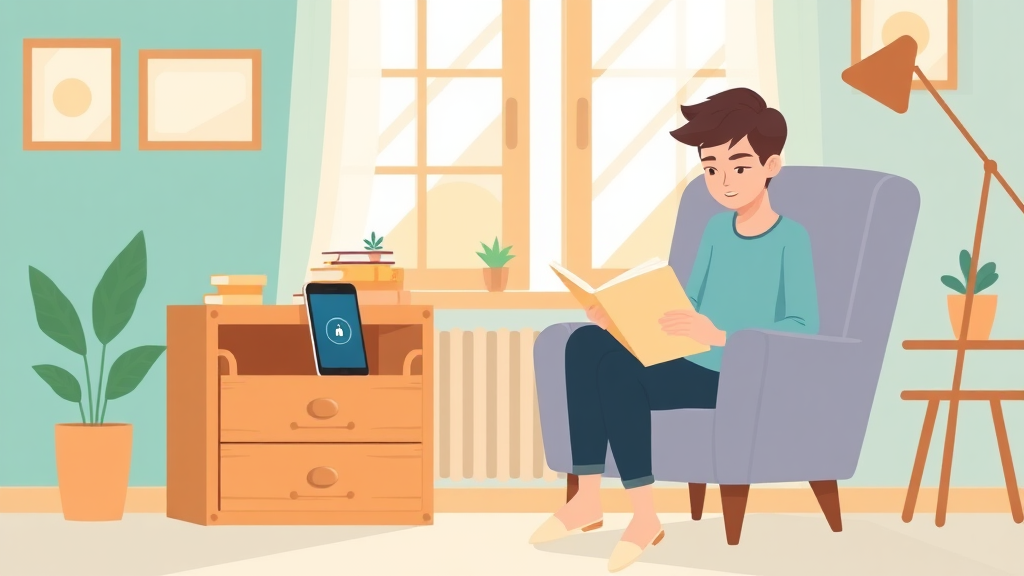
Reading: The Great Unplugging
Read the text carefully. You will need it for the exercises below.
Could you survive a week without your phone? A growing number of people are trying. Some book phone-free retreats; others swap their smartphones for simple "dumbphones" that only call and text. Those who complete a week offline often sound like new people. They report falling asleep faster, reading whole books again, and holding longer conversations. One participant said her attention span felt "repaired" after just three days, and that the urge to check her pocket slowly faded. Without constant notifications, her evenings felt twice as long.
Not everyone is convinced. Critics argue that smartphones are essential tools, not enemies. We use them to pay, navigate, translate and stay in touch with family. Giving up your phone for a week, they say, mostly proves that you can live without maps and messages if someone else handles them for you. The real problem is not the device but our habits: mindless scrolling, checking the screen during dinner, replying to messages at midnight. Learn to switch off at the right moments, they argue, and the phone becomes a servant instead of a master.
Vocabulary: Habits and Attention
Match each word or phrase to its definition.
- distraction
- attention span
- willpower
- urge
- mindless
- notification
- screen time
- withdrawal
- something that pulls your attention away from a task
- the length of time you can concentrate on one thing
- the mental strength to resist temptation
- a sudden, strong desire to do something
- done automatically, without thinking
- an alert from an app that appears on your screen
- the total hours you spend looking at your devices
- the uncomfortable feeling when you stop something you depend on
Comprehension
Choose the best answer for each question, according to the text.
1. What do people who complete a phone-free week often report?
- They sleep better and read whole books again
- They feel bored and lonely most of the time
- They buy new smartphones immediately afterwards
- They start working longer hours
2. According to the text, what is a "dumbphone"?
- A simple phone that only calls and texts
- A smartphone that no longer works
- A phone without a battery
- An app that blocks notifications
3. What happened to the participant's urge to check her pocket?
- It slowly faded
- It got stronger every day
- It only appeared at night
- It never changed
4. According to critics, what is the real problem?
- Our habits, not the device itself
- The price of modern smartphones
- Slow internet connections
- Phone-free retreats
Reading between the lines
5. The participant's comment that her attention span felt "repaired" suggests that…
- she believes phone use had damaged her ability to concentrate
- she took her phone to a repair shop
- she has never had problems concentrating
- she stopped reading books after the week
6. The phrase "a servant instead of a master" implies that…
- many people currently let their phones control their behaviour
- phones work better when they are shared
- people should hire assistants to answer their messages
- technology always improves people's lives
Use the New Vocabulary
Complete each sentence with a word or phrase from the box.
distractionattention spanwillpowerurgemindlessnotificationscreen timewithdrawal
1. The TV in the corner of the café was a constant ______ while I tried to study.
2. After years of watching short videos, my ______ is much shorter than it used to be.
3. It takes real ______ to leave your phone in another room all evening.
4. Whenever I feel the ______ to check my messages, I take a deep breath instead.
5. I caught myself in twenty minutes of ______ scrolling before I had even had breakfast.
6. Every new ______ on my lock screen breaks my concentration for several minutes.
7. My weekly ______ report says I spend more than thirty hours on my phone.
8. On her first day offline she felt real ______ symptoms, like nervousness and boredom.
Phrasal Verbs: Technology Habits
Choose the correct phrasal verb to complete each sentence.
1. Experts recommend that you
- switch off
- check in
- give up
- cut down on
2. She spent the whole journey
- scrolling through
- switching off
- giving up
- checking in
3. I'm trying to
- cut down on
- scroll through
- check in
- switch off
4. He decided to
- give up
- check in
- switch off
- scroll through
5. When I'm travelling, I always
- check in
- switch off
- cut down on
- scroll through
Your Turn: For or Against?
Would you try a phone-free week? Write 80-100 words arguing for or against the idea. Give two reasons to support your opinion.
This lesson is interactive: open this page in a browser to fill in the answers and get them checked automatically. Teachers can copy the lesson and edit every part of it.