The Lost City on the Nile
Homework · Level B1+ · Grammar: past simple and past passive
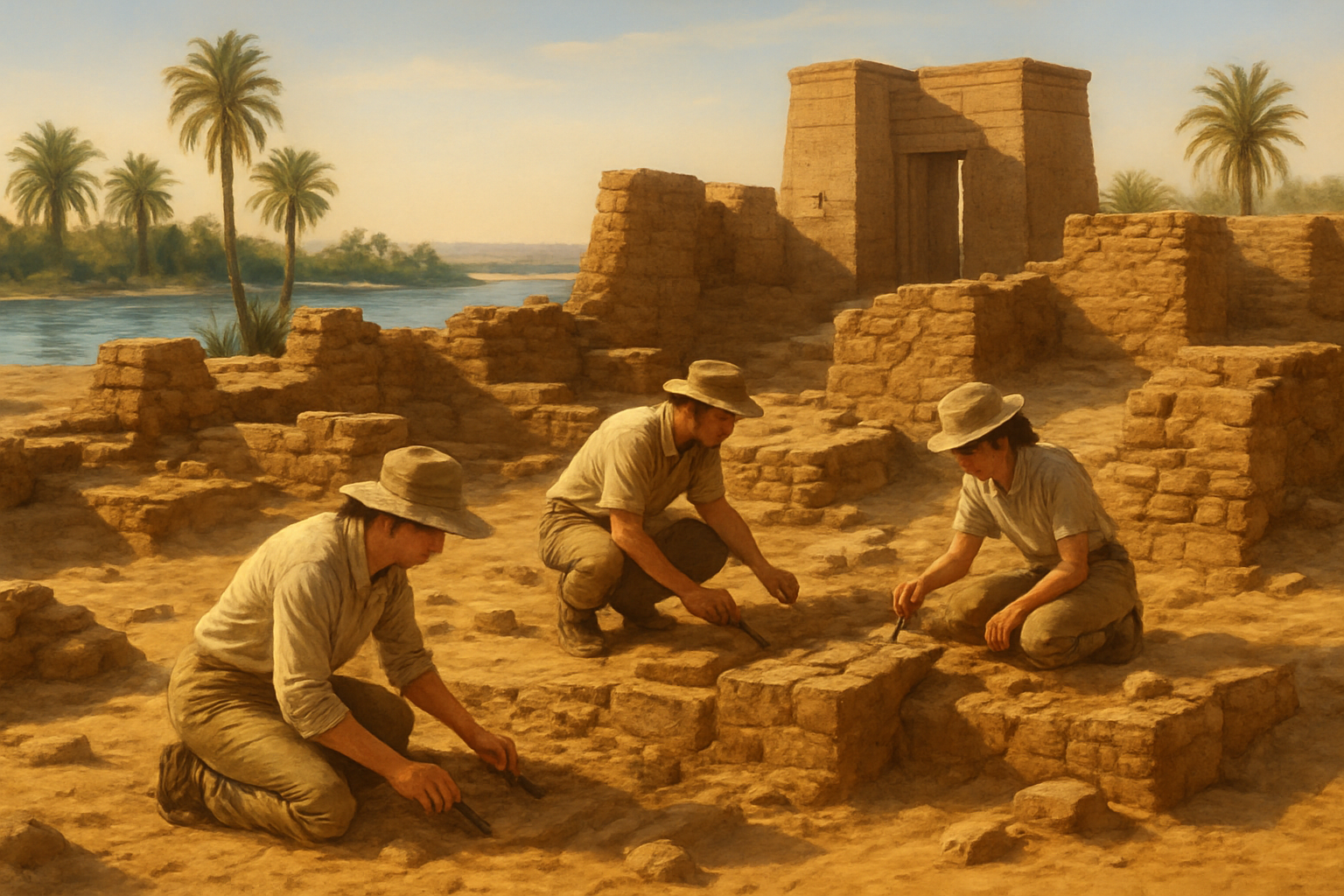
Archaeologists are uncovering a city on the Nile that reveals the origins of ancient Nubia, an African kingdom that once rivalled Egypt.
Grammar Snapshot
We use the past simple when we say who did an action: Archaeologists found a temple.
We use the past passive (was / were + past participle) when the action matters more than the person who did it: A temple was found last year. The walls were uncovered in 2003.
If we want to mention who did it, we add by: The city was discovered by a small team.
Reading: A Kingdom Under the Sand
Read the text carefully. You will need it for the exercises below.
For a long time, historians believed that ancient Egypt had no serious rivals in Africa. That idea was changed by a remarkable discovery on the banks of the Nile. In 2003, archaeologists began to excavate a lost city in northern Sudan. The city was built more than 4,500 years ago, and it was once the capital of a powerful African kingdom called Kush.
During the excavation, thick walls were uncovered, and the remains of temples and palaces were found under the sand. Thousands of objects were discovered, including gold jewellery, painted pottery and simple tools. These objects showed that the people of Kush traded with Egypt for centuries.
Later, around 700 BC, Nubian kings conquered their northern neighbour, and Egypt was ruled by them for almost one hundred years. Today, the site is studied by teams from many countries, and every season new streets and buildings are added to the map of this forgotten city.
1. Check Your Understanding
Choose the correct answer for each question about the text.
1. Where is the lost city located?
- In southern Egypt
- In northern Sudan
- On the coast of the Red Sea
2. When was the city built?
- Around 700 BC
- In 2003
- More than 4,500 years ago
3. What was found under the sand?
- A giant pyramid
- The remains of temples and palaces
- Ancient wooden ships
4. What did the discovered objects show?
- The people of Kush traded with Egypt for centuries.
- The city was destroyed in a long war.
- The kingdom had no contact with other lands.
5. What happened around 700 BC?
- Nubian kings conquered Egypt.
- Egypt conquered the kingdom of Kush.
- The city was destroyed by a flood.
6. Who studies the site today?
- Nobody — the excavation has finished.
- Only archaeologists from one country
- Teams from many countries
2. Past Simple or Past Passive?
Put the verb in brackets into the past simple or the past passive. Type the full form (for example: found or was found).
1. The city ______ (build) on the east bank of the Nile.
2. Archaeologists ______ (start) the excavation in 2003.
3. Several temples ______ (uncover) during the first season.
4. The team ______ (find) gold jewellery in one of the tombs.
5. Hundreds of pots ______ (discover) near the old market.
6. Traders from Kush ______ (sell) gold and ivory to Egypt.
7. The walls ______ (damage) by floods many centuries ago.
8. In the end, Egypt ______ (rule) by Nubian kings for almost a century.
3. Active or Passive?
Choose the correct verb form to complete each sentence.
1. The lost city
- discovered
- was discovered
- was discovering
2. The workers
- removed
- were removed
- was removed
3. A large temple
- found
- was found
- were found
4. The kings of Kush
- was built
- built
- were built
5. Many objects
- sent
- was sent
- were sent
6. Local guides
- showed
- were shown
- was shown
4. Archaeology Words
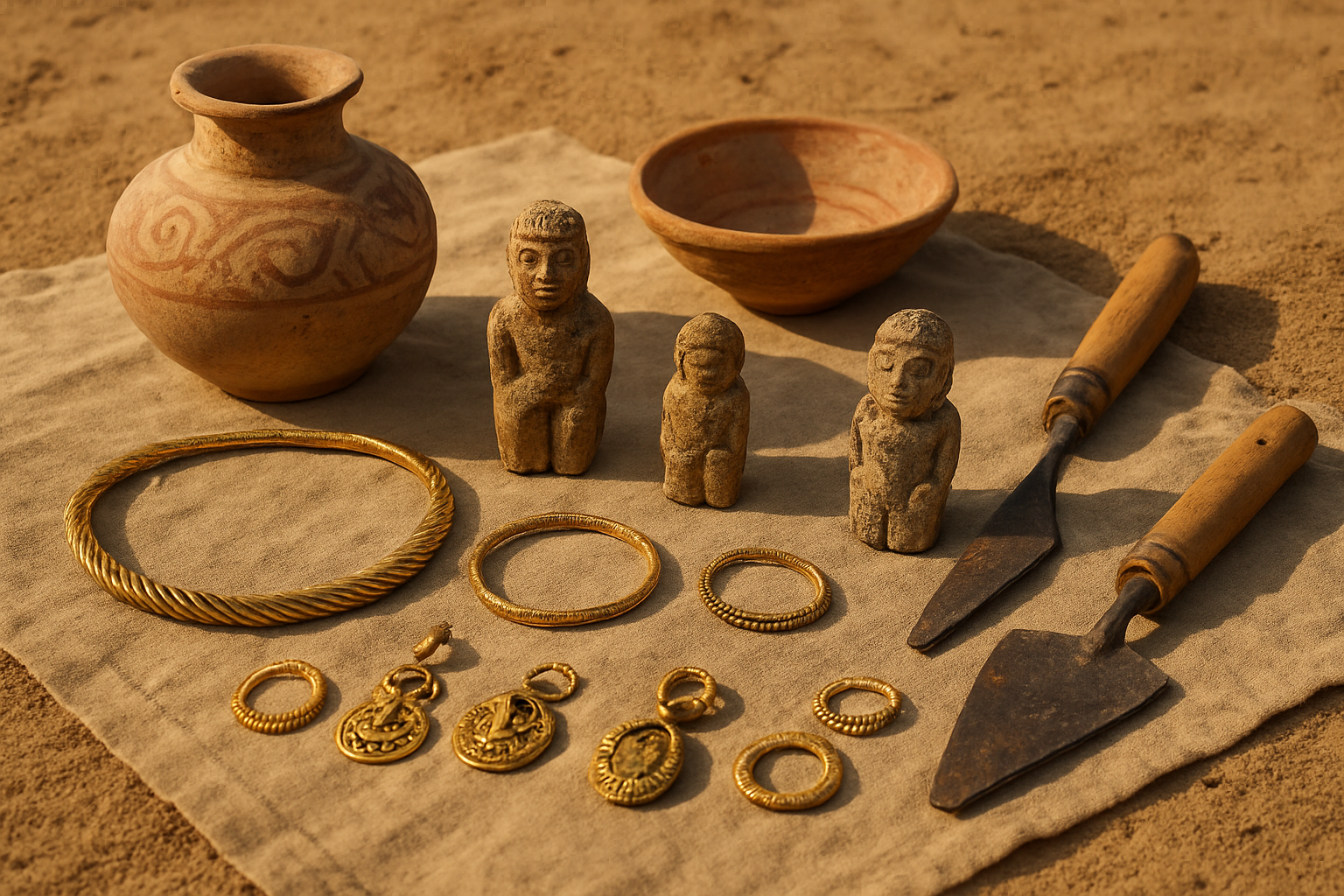
Match each word to its definition.
- excavation
- archaeologist
- ruins
- artefact
- tomb
- pottery
- kingdom
- site
- the process of digging in the ground to look for old things
- a scientist who studies the past by digging up old places
- the broken parts of old buildings that still remain
- an object that was made by people long ago
- a place where a dead person is buried
- pots and dishes made of baked clay
- a country that is ruled by a king or queen
- a place where something important happened or is found
5. Rewrite in the Passive
Rewrite each sentence in the past passive. Type the missing verb form (for example: was found or were found).
1. Archaeologists discovered the city in 2003.
The city ______ by archaeologists in 2003.
2. Workers uncovered a long wall.
A long wall ______ by workers.
3. The team found gold rings in a tomb.
Gold rings ______ by the team in a tomb.
4. Nubian kings ruled Egypt for a century.
Egypt ______ by Nubian kings for a century.
5. Traders sold pottery in the market.
Pottery ______ by traders in the market.
6. Floods destroyed the old bridge.
The old bridge ______ by floods.
6. Your Turn: An Old Place in Your Town
Write 60-80 words describing an old place in your town (a building, a bridge, a monument). Use at least three passive sentences, for example: It was built in 1900. The walls were painted white.
Check your answers before you submit. Well done — you have explored a lost kingdom and practised the past passive!
This lesson is interactive: open this page in a browser to fill in the answers and get them checked automatically. Teachers can copy the lesson and edit every part of it.