Nature & Conservation · B1 Homework
A Record Year for the World's Rarest Parrot
New Zealand's kākāpō just had its best breeding season in history. Read the text, learn the vocabulary, and complete the tasks below on your own.
Reading
Listen to the text while you read.
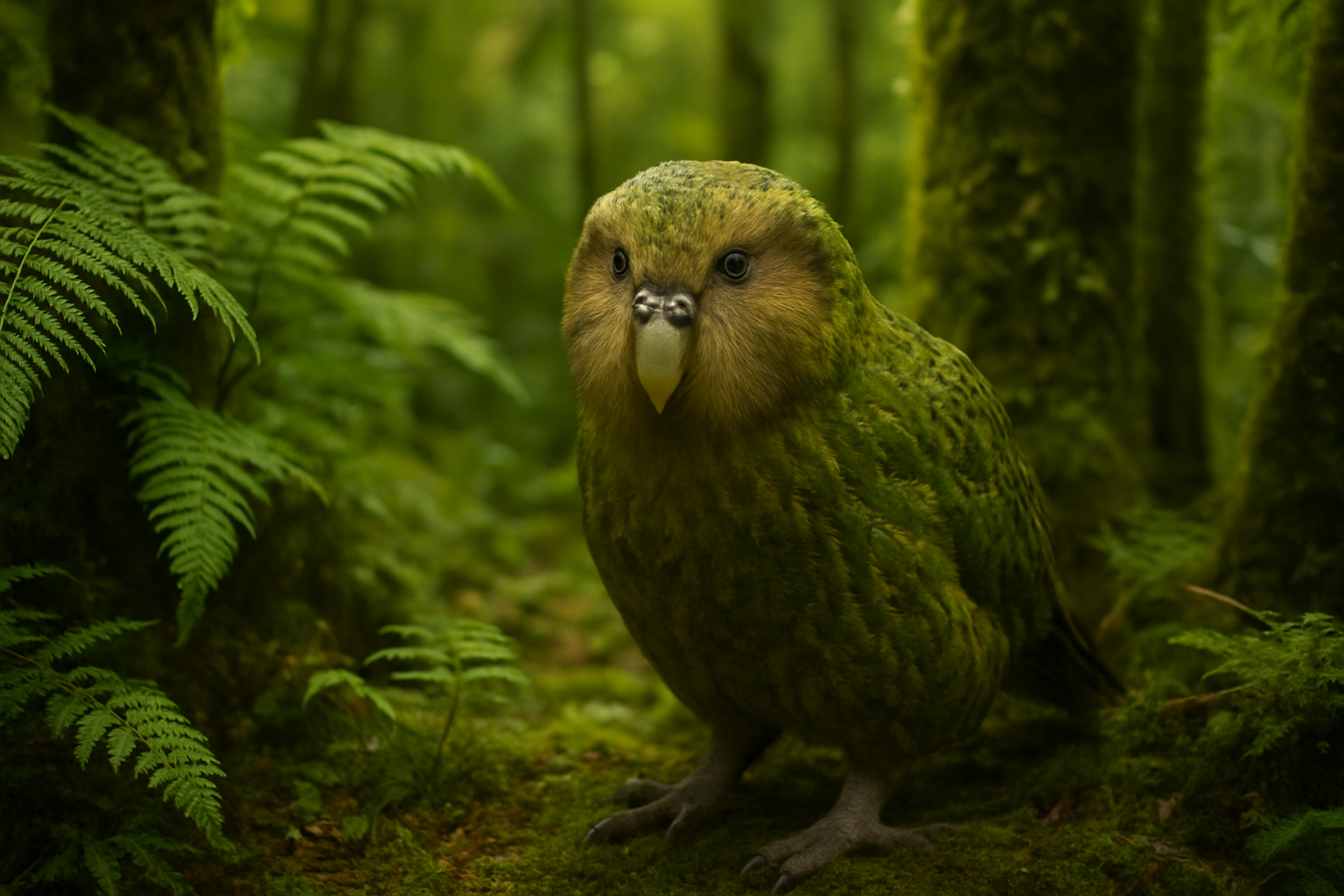
The kakapo is one of the rarest birds on Earth. It is a large, heavy parrot from New Zealand that cannot fly. It is active at night, when it walks through the forest looking for fruit, seeds, and leaves. For millions of years, the kakapo had no natural enemies. Then people arrived and brought cats, rats, and stoats. These predators hunted the slow, friendly birds, and the species almost became extinct. Today, every kakapo lives on small islands where there are no predators. Rangers watch each bird carefully. They give the parrots extra food, check their health, and protect the nests. Every adult bird has a name and a small radio transmitter. The hard work is bringing results. In 2026, the kakapo had its best breeding season ever: more than 100 chicks hatched. The previous record was 85 chicks in 2019. With only about 235 adults alive, every new chick is a small victory for conservation.
The kākāpō is one of the rarest birds on Earth. It is a large, heavy parrot from New Zealand that cannot fly. It is active at night, when it walks through the forest looking for fruit, seeds, and leaves. For millions of years, the kākāpō had no natural enemies. Then people arrived and brought cats, rats, and stoats. These predators hunted the slow, friendly birds, and the species almost became extinct.
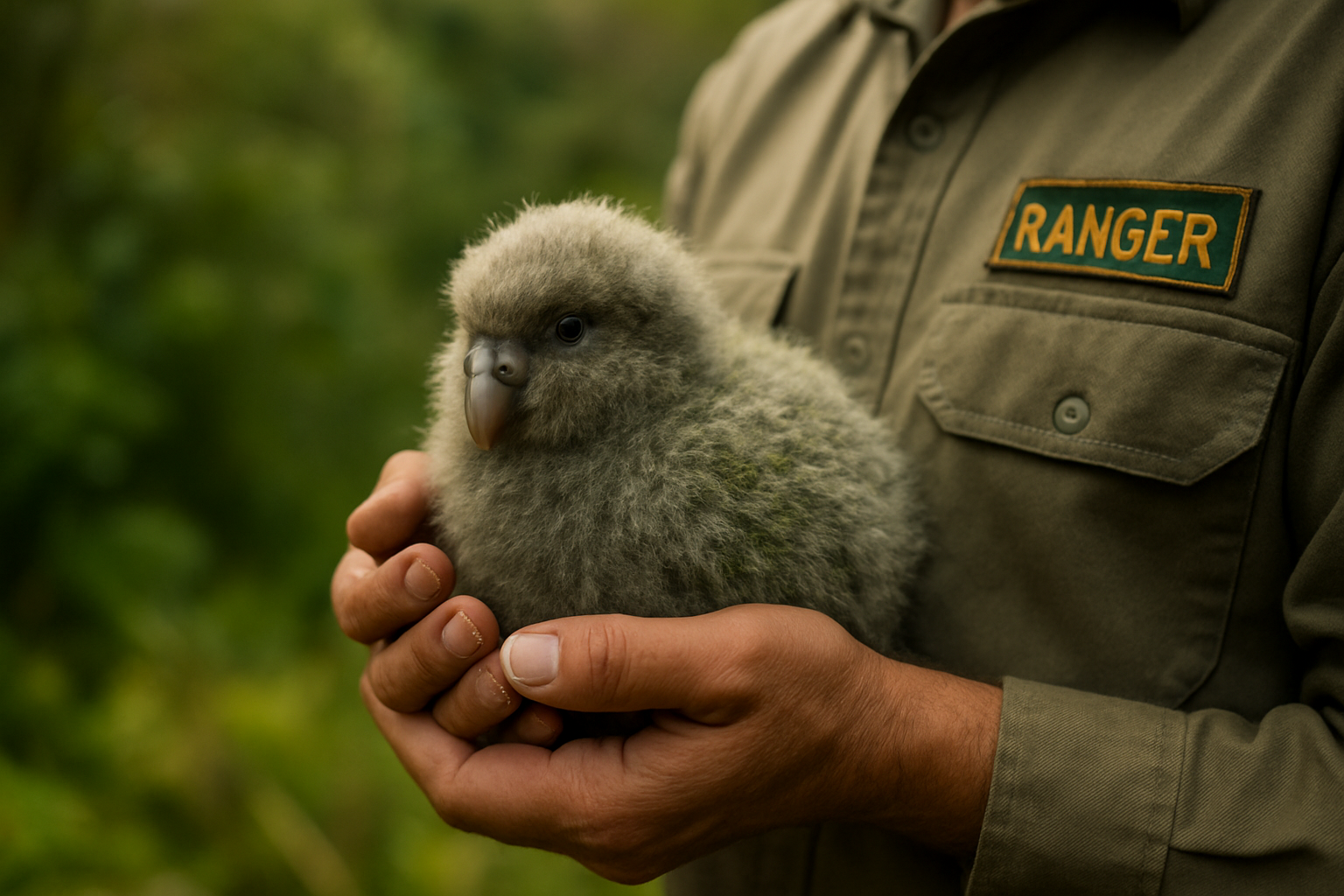
Today, every kākāpō lives on small islands where there are no predators. Rangers watch each bird carefully. They give the parrots extra food, check their health, and protect the nests. Every adult bird has a name and a small radio transmitter.
The hard work is bringing results. In 2026, the kākāpō had its best breeding season ever: more than 100 chicks hatched. The previous record was 85 chicks in 2019. With only about 235 adults alive, every new chick is a small victory for conservation.
1. Vocabulary
Match each word from the text with its definition.
- flightless
- predator
- ranger
- chick
- breeding season
- hatch
- extinct
- conservation
- unable to fly
- an animal that hunts and eats other animals
- a person whose job is to protect wild animals and nature
- a very young bird
- the time of year when animals produce babies
- to come out of an egg
- no longer existing anywhere on Earth
- the protection of nature and wild animals
2. Comprehension
Choose the correct answer for each question.
1. What is special about the kākāpō's body?
- It is the smallest parrot in the world.
- It is heavy and cannot fly.
- It can swim very well.
- It has bright red feathers.
2. When is the kākāpō active?
- In the early morning.
- During the day.
- At night.
- Only in winter.
3. Why did the kākāpō almost disappear?
- The climate became too cold for it.
- It could not find enough fruit.
- Other parrots took its forest.
- People brought predators like cats, rats, and stoats.
4. Where do all kākāpō live today?
- In zoos around the world.
- On small islands without predators.
- In city parks in New Zealand.
- High in the mountains.
5. How do rangers help the kākāpō?
- They teach the birds to fly.
- They move the birds to other countries.
- They give extra food, check the birds' health, and protect the nests.
- They keep the birds in cages.
6. How many chicks hatched in 2026?
- Fewer than 50.
- About 85.
- More than 100.
- Exactly 235.
3. True or False
Read each statement and decide if it is true or false.
1. The kākāpō can fly short distances.
- True
- False
2. The kākāpō looks for food at night.
- True
- False
3. Cats, rats, and stoats hunted the kākāpō.
- True
- False
4. Every adult kākāpō has a name and a radio transmitter.
- True
- False
5. The previous record was 100 chicks in 2019.
- True
- False
6. There are about 235 adult kākāpō alive today.
- True
- False
4. Use the New Words
Complete each sentence with a word or phrase from the box. Use each answer once.
flightless · predator · rangers · chicks · breeding season · hatch · extinct · conservation
1. The penguin is a ______ bird, but it is an excellent swimmer.
2. The stoat is a dangerous ______ that hunts small birds.
3. On the islands, ______ check the health of every bird.
4. Baby birds ______ when they break out of their eggs.
5. More than 100 ______ were born during the record year.
6. Spring is the ______ for many birds in New Zealand.
7. Without help, the kākāpō could become ______ like the dodo.
8. Thanks to ______ , the number of kākāpō is growing again.
5. Your Turn
Write 60-80 words about an animal from your country that deserves protection. Describe the animal, explain why it is in danger, and suggest how people could help it. Try to use at least three words from this lesson.
This lesson is interactive: open this page in a browser to fill in the answers and get them checked automatically. Teachers can copy the lesson and edit every part of it.